
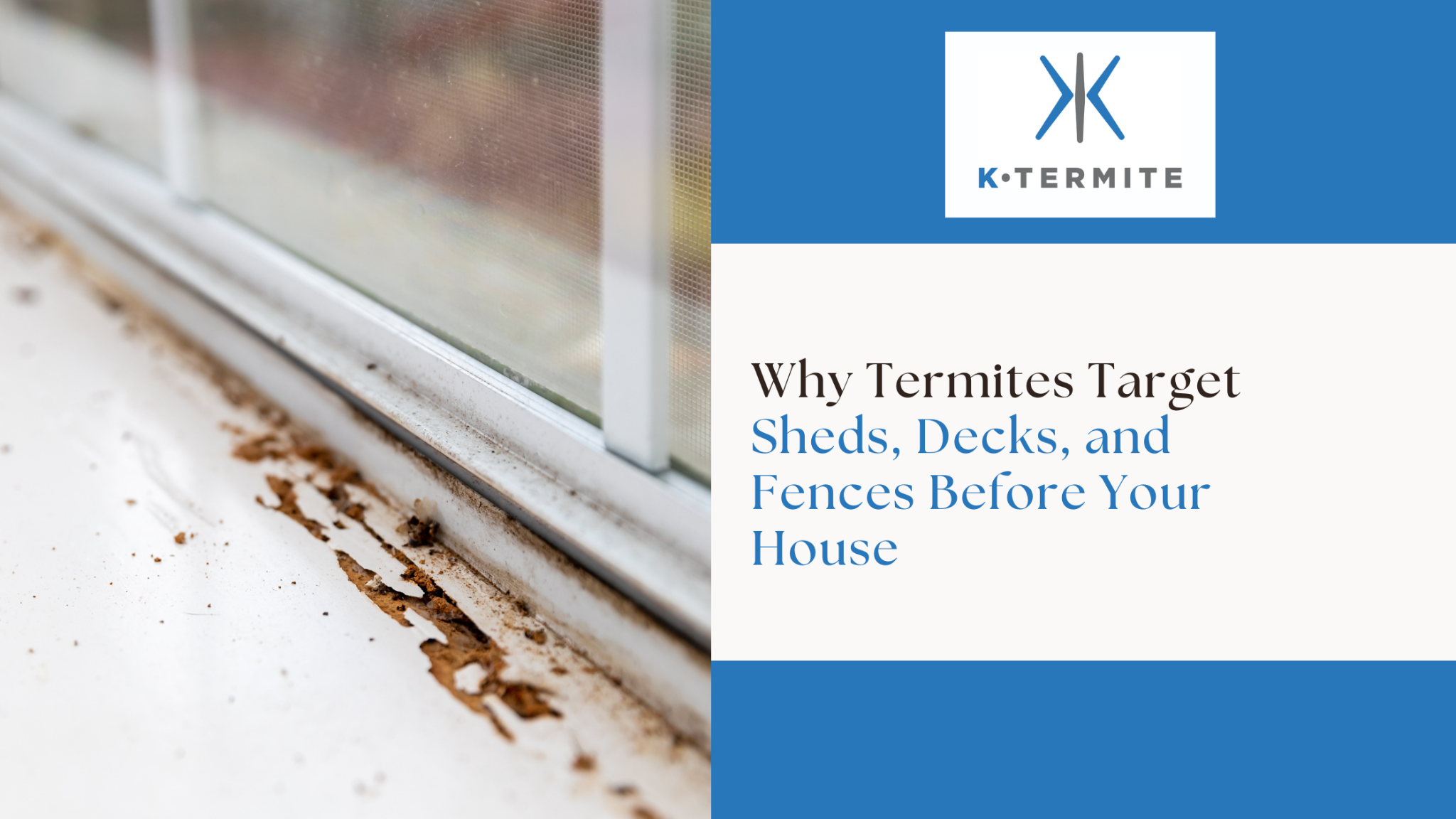
Finding termites in a shed or fence can be confusing. Many homeowners assume termites go straight for the house, but that’s not usually how an infestation begins.
Outdoor wooden structures often provide easier access, more moisture, and fewer disturbances. Because of these conditions, termites frequently begin feeding on sheds, decks, and fences before reaching the main structure of the home.
Understanding why termites start in these areas can make it much easier to prevent larger problems around your property.
Why Termites Prefer Outdoor Wooden Structures
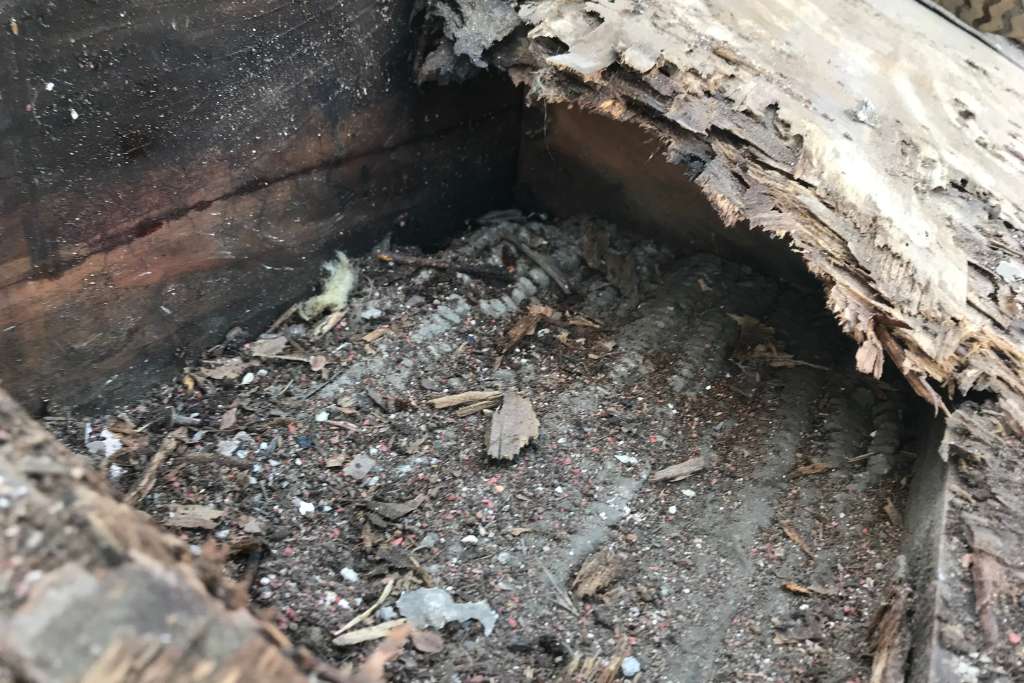
The earliest signs of termite activity are often discovered in structures like sheds, decks, or fences. These areas can allow termites to establish feeding activity quietly before expanding toward larger structures on the property.
1. Direct Contact with Soil
One of the biggest reasons termites infest sheds, decks, and fences first is their direct contact with soil. Subterranean termites live in underground colonies and travel through soil to find wood. When outdoor structures have wooden components touching the ground, termites can reach them quickly without needing to build long travel tunnels.
Common examples include:
- Fence posts buried directly in the soil
- Deck support posts touching the ground
- Shed foundations built directly on soil
Because termites can access these areas easily, they often begin feeding there before exploring nearby structures.
2. High Moisture Around Outdoor Structures
Moisture plays a critical role in termite survival. Damp environments prevent termites from drying out and make wood easier to break down. Outdoor structures frequently collect moisture due to environmental and landscaping conditions.
Some common moisture sources include:
- Rainwater collecting near structures
- Irrigation systems spraying wooden areas
- Poor drainage around sheds or decks
- Soil grading that directs water toward structures
When wood remains damp for long periods, it becomes softer and more vulnerable to termite activity.
Learn: Can Rain Cause a Termite Infestation?
3. Untreated or Weathered Wood
Outdoor wood constantly faces sunlight, rain, and temperature changes. Over time, these conditions cause wood to crack, weaken, and deteriorate.
Weathered wood becomes easier for termites to enter and consume. Small cracks allow termites to access the interior of the wood without being easily noticed.
Because sheds, fences, and decks are sometimes overlooked during maintenance, termites can quietly begin feeding. This often leads to situations where homeowners discover termites eating fence boards or causing structural weakening.
4. Minimal Human Activity
Unlike the inside of a home, outdoor structures are not inspected frequently. Homeowners may check them only when repairs are needed or when visible damage appears.
This lack of regular inspection gives termites enough time to expand their activity. During this period, termites may:
- Create large feeding tunnels inside the wood
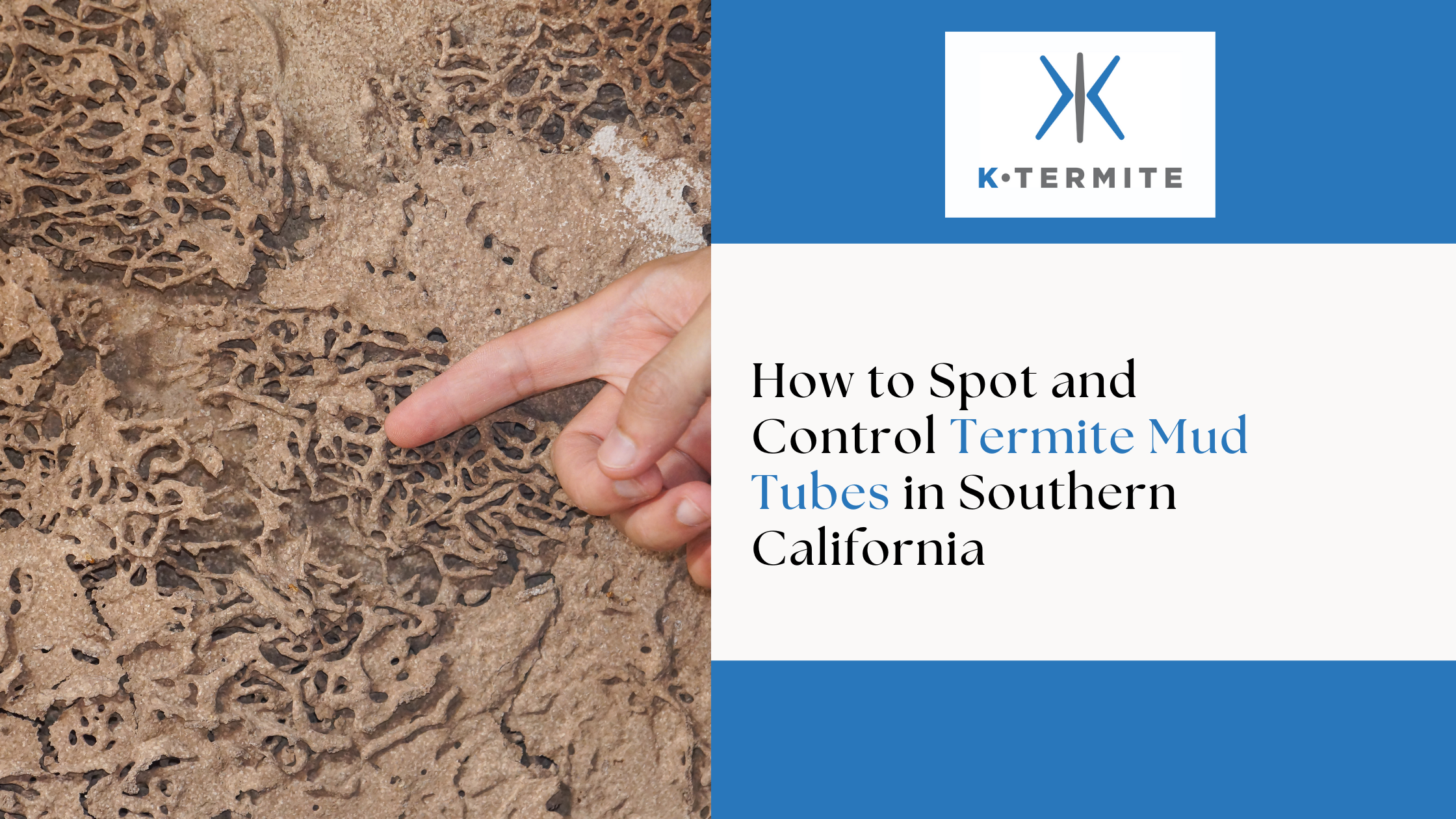
- Build mud tubes along structural surfaces
- Spread toward nearby wooden structures
By the time someone notices termites in a deck or fence posts, the infestation may already be well established.
5. Landscaping That Traps Moisture
Certain landscaping features can unintentionally create environments that attract termites. When moisture is trapped near wooden structures, the wood becomes more vulnerable.
Examples of landscaping conditions that increase risk include:
- Thick mulch piled against wood
- Dense planting beds touching the shed walls
- Shrubs or branches resting against decks or fences
These conditions reduce airflow and keep wood damp, making it easier for termites to begin feeding.
6. Firewood or Lumber Stored Nearby
Firewood stacks and unused lumber can attract termites when placed close to sheds, decks, or fences. These wood piles provide an easy food source and often remain undisturbed for long periods.
Once termites begin feeding on the woodpile, they may gradually expand their activity toward nearby structures. To reduce the risk, firewood should be stored away from buildings and kept elevated above the ground.
7. Proximity to Termite Colonies
Termite colonies naturally live underground, and many outdoor wooden structures are located very close to soil environments where colonies exist.
Examples include:
- Fence lines running along property boundaries
- Garden sheds placed directly on the soil
- Deck foundations are partially buried underground
Because these structures are closer to termite habitats, they often become the first feeding sites before termites move toward larger buildings such as homes.
Related Articles:
Can Termites Be Removed Permanently?
Top Questions to Ask Your Termite Inspector
Why a Free Termite Inspection from K Termite Is Worth It
How Termites Move From Outdoor Structures to Homes
Although termites may begin in sheds or fences, they often expand their colony over time and eventually move toward the main structure of the property. To travel safely between food sources, termites build mud tubes or underground tunnels that protect them from light and dry air. These hidden pathways allow them to move from outdoor wooden structures to the house without being easily noticed.
Once termites reach the home, they may start feeding on important wooden components such as structural beams, flooring, wall framing, and wooden cabinets or trim. Because termite activity usually takes place inside walls or other concealed areas, the damage can continue for a long time before homeowners realize there is a problem.
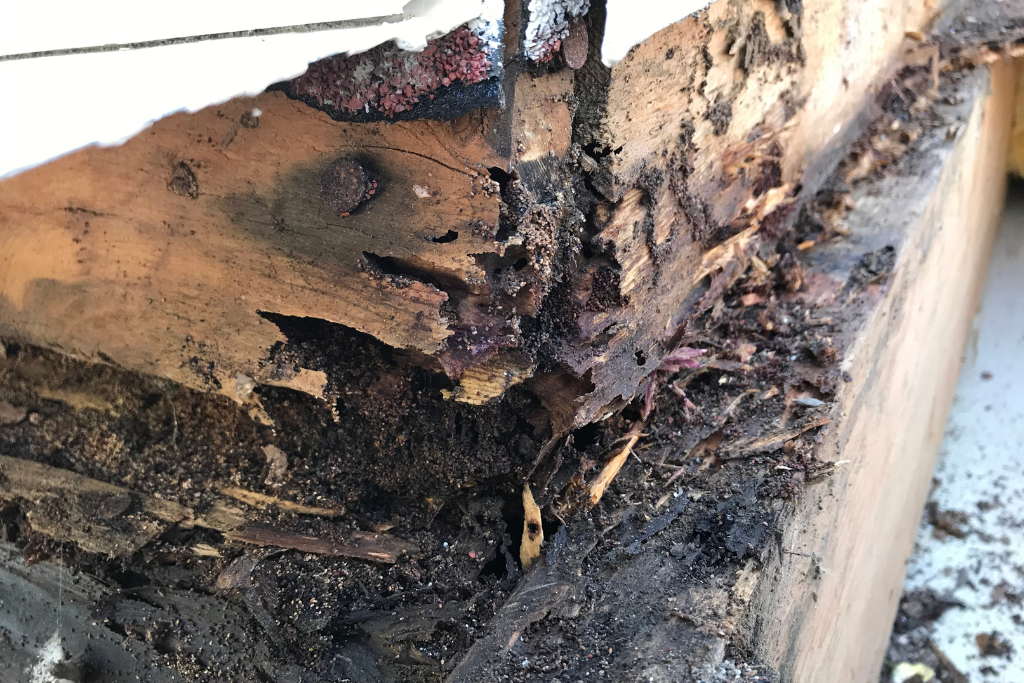
Steps to Reduce Termite Risk Around Outdoor Structures
Although termites naturally seek wood, homeowners can take practical steps to reduce the likelihood of infestation.
- Keep Wood Away From Soil: Whenever possible, ensure wooden structures are raised above ground level or installed with protective barriers.
- Reduce Excess Moisture: Moist environments attract termites. Proper drainage, ventilation, and maintenance help keep outdoor areas dry.
- Replace Damaged Wood: Old or weakened wood becomes easier for termites to consume. Replacing damaged boards can reduce the chances of termites in deck wood or fence boards.
- Maintain Distance From the House: If possible, outdoor structures such as sheds should be placed a safe distance away from the home’s foundation.
- Schedule Regular Inspections: Professional inspections help identify termites in sheds, fences, and decks early, reducing the risk of the infestation spreading to nearby structures.
Protect Your Home from Termite Damage with K Termite
Even when outdoor structures are maintained properly, termites can still appear. Regular inspections and professional treatment options are the most reliable ways to protect a property.
K Termite provides detailed termite inspections and effective treatment solutions designed to protect homes and surrounding structures. Our experienced team carefully checks areas such as sheds, decks, fences, and structural wood to identify early signs of termite activity.
With multiple treatment options, strong warranties, and professional service, K Termite helps homeowners keep their properties protected from termite damage.
If you suspect termite activity or want to prevent future damage, contact K Termite today to schedule a professional termite inspection and protect your property with confidence.

.png)
.png)
.png)
.png)
.png)
.png)
.png)
.png)
.png)
.png)
.png)
.png)
.png)
.png)
.png)
.png)
.png)
.png)
.png)
.png)
.png)
.png)
.png)
.png)
.png)
.png)
.png)
.png)
.png)
.png)
.png)
.png)
.png)








.png)
.png)
.png)
.png)
.png)
.png)
.png)
.png)


.png)
.png)







.png)
.png)

.png)
.jpg)

.webp)
.webp)




.webp)

.svg)

